THE HOUNDS OF MYTH
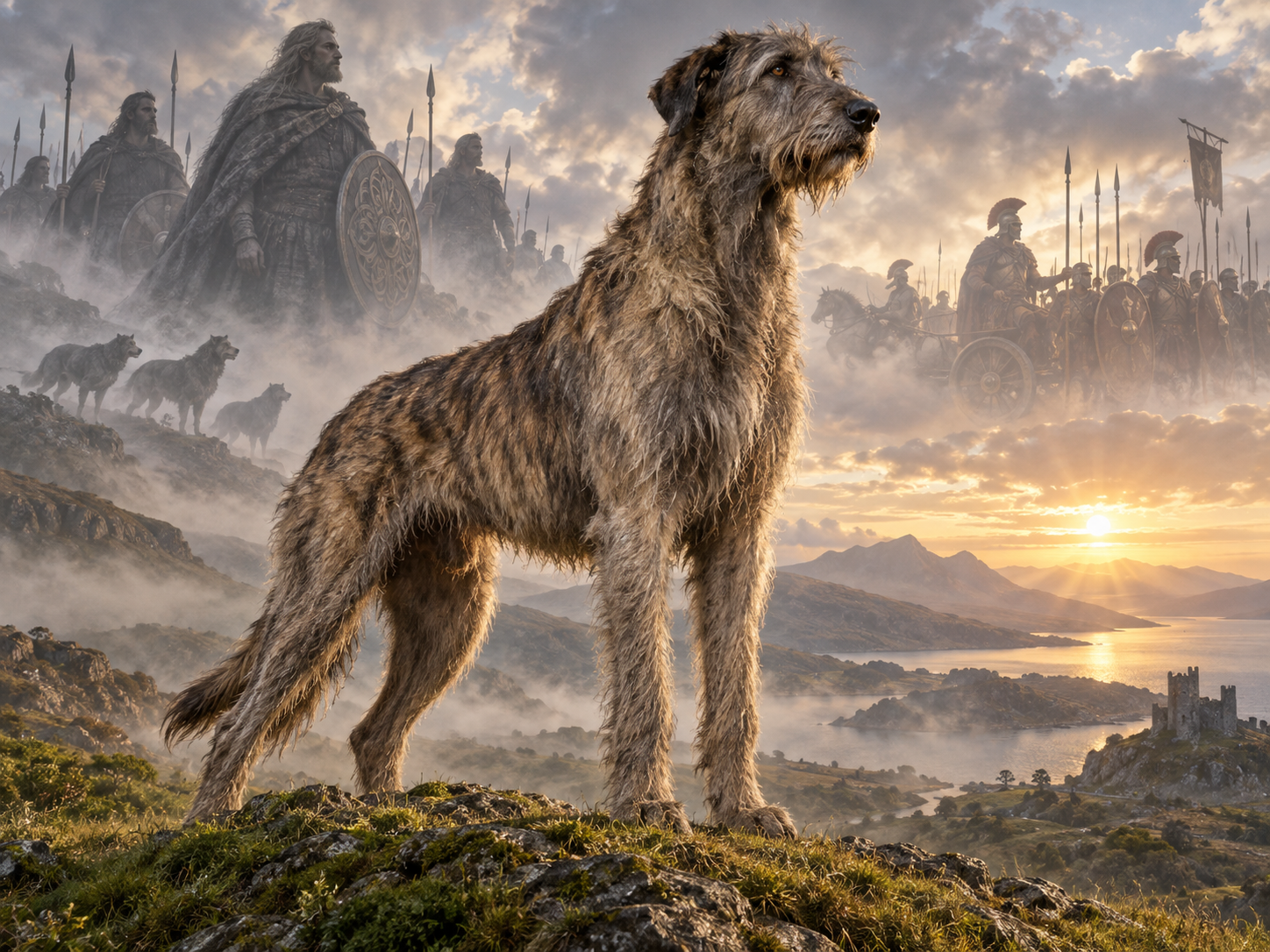
We say the Irish Wolfhound is ancient — that their bloodline stretches back thousands of years, to the first people who walked the land of Ireland.
But history asks an honest question: How do we know they are the same dog?
The answer lies not in untouched bloodlines, but in deliberate preservation.
By the late 1800s, the Irish Wolfhound stood on the edge of extinction. With only a few hundred true hounds remaining, inbreeding threatened what little was left. Yet those remaining hounds still carried the ancient form — the size, the structure, the temperament, and the purpose described in Ireland’s oldest records.
To save them, devoted breed lovers — led by Captain George Augustus Graham — did not attempt to create something new. They worked to protect something very old.
Using Great Danes, Scottish Deerhounds, Mastiffs, and Borzoi, they strengthened the fragile bloodline while selecting only for the traits that matched the original Irish hound. The goal was never to change the Wolfhound. It was to hold the line against loss.
So no — today’s Irish Wolfhound is not genetically identical to its ancient ancestors. But it is genetically continuous with them.
The old descriptions still match the living dog: a towering hunter of wolves, a guardian of hearth and field, a companion fit for warriors and kings.
These were not hounds that circled prey and waited for humans to finish the task. They were bred to bring down wolves themselves. They ran beside chariots. They pulled armored riders from horseback. They struck and unbalanced enemies larger than themselves — as swiftly as plucking a flower from its stem.
And yet, they were never only beasts of war.
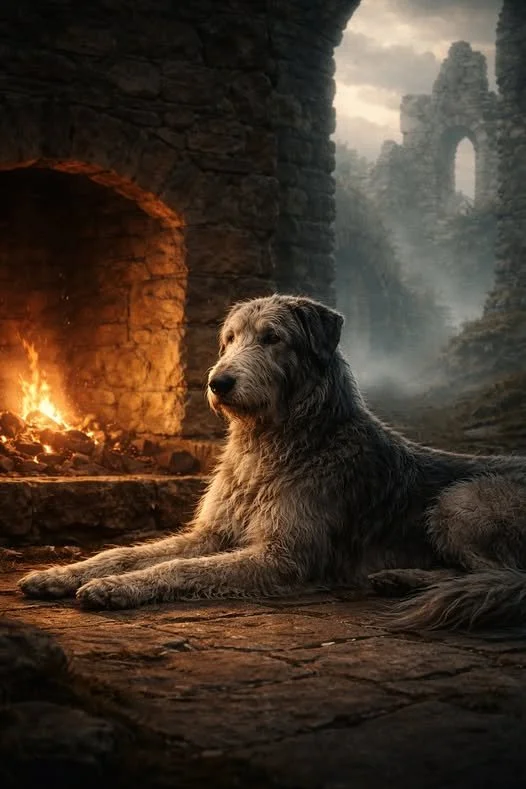
They shared the homes of their people. They lay at the fire hearth. They lived among families, not apart from them. There, beside warmth and quiet voices, the war hound softened into something else we still recognize today: the gentle giant.
What was preserved was not merely a body, but a nature shaped by both battle and belonging.
From ancient battlefields to modern hearths, the world has changed around them. But the shape of the hound remains. The calm watchfulness remains. The gentleness with their people remains.
They are not unchanged. They are carried forward.
And in every Irish Wolfhound today walks the echo of something very old — not reinvented, but remembered.
Something ancient still walks with us.