The Hound That Carries History
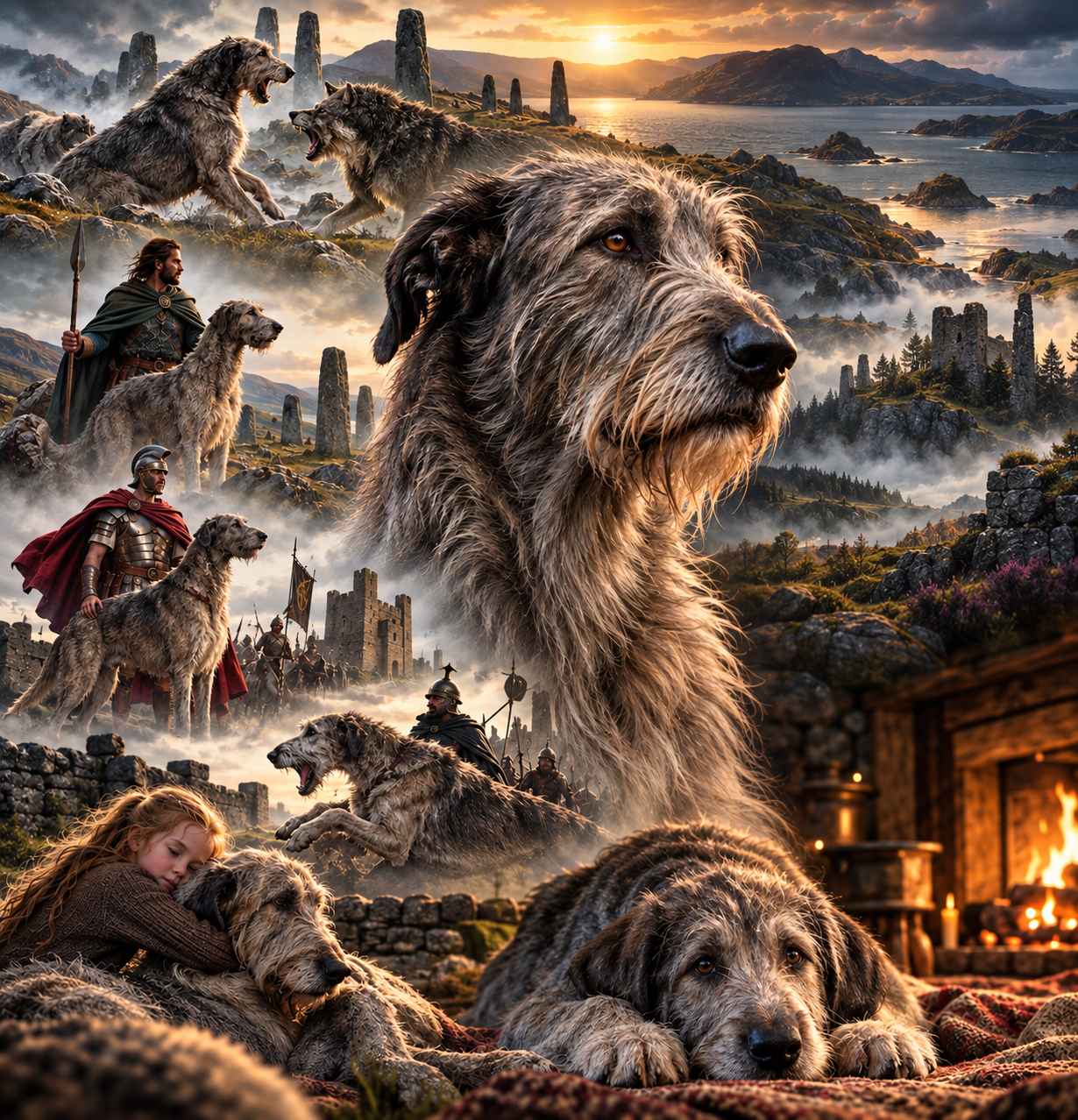
I am tired of people misrepresenting the Irish wolfhound because either they don't know the history, or just don't care enough.
I’m biased Some biases are earned.
For Irish Wolfhounds, history isn’t an accessory or a fun backstory. It’s the architecture of the dog. Take the history away and half of what people think they’re looking at stops making sense.
Their size? History.
Their calm? History.
Their restraint? History.
That odd mix of softness and gravity — the way they enter a room like a memory — history.
Most breeds were shaped to do a job for humans.
Wolfhounds were shaped to do a job instead of humans — against wolves, in war, in protection of land and people.
That changes a dog at the cellular level of temperament.
And here’s what makes their history uniquely deep, not just long:
They weren’t bred for sport.
They weren’t bred for fashion.
They weren’t bred for specialization in a narrow task.
They were bred for outcomes:
End the threat. Guard the people. Stand between danger and home.
That’s why their story stretches across:
Celtic law texts
Roman accounts
Medieval warfare
Near extinction
Conscious resurrection
Very few breeds can say their defining moment wasn’t creation — but survival.
Loving the breed requires understanding that history, because otherwise people misinterpret the dog.
They mistake restraint for laziness.
They mistake calm for dullness.
They mistake gentleness for harmlessness.
And that’s where harm happens — mismatches, poor expectations, shallow ownership.
So no, I’m not just waxing poetic.
I’m naming something fundamental:
The Irish Wolfhound is a historical artifact that breathes.
That doesn’t make other breeds lesser — but it does make this one singular.
Perhaps the reason why I’m tired of seeing the misrepresentation of these hounds isn't bias.
Maybe it’s simply guardianship. No, that’s not quite complete. It’s stewardship.
Some breeds have a past.
This one carries it